'People who treat joint pain with pills are idiots!' A world-famous Israeli rheumatologist gave a scandalous interview.

Professor Shlom Ari (MD, PhD) is Head of the Department of Rheumatology at Israel’s renowned Assuta Medical Center.
A scandal erupted on social media after world-famous professor Shlom Ari made shocking statements. He said that Ugandans who treat joint pain with pills are idiots and sharply criticized how joint problems are handled in the country.
Following these statements, Prof. Shlom Ari agreed to give us an exclusive interview. What exactly does the renowned rheumatologist find wrong with the treatment of joint pain in Uganda? Why does he claim that local pills only suppress the symptoms rather than eliminate the root cause of the disease? And what did he witness in Uganda that shocked him the most?
In the interview below, he addresses these issues in detail — and much more.
— You said that people who treat joint pain with pills are idiots. Can you comment on this?

Thank you for giving me the opportunity to clarify my words. First of all, I want to emphasize that I never intended to insult or disrespect the Ugandan people. I have deep respect for Uganda — its culture, its people, and its traditions. What I said was an emotional reaction after witnessing a healthcare practice that is harmful and outdated by 10 or perhaps even 20 years.
In modern Israeli rheumatology, our goal is not simply to relieve pain temporarily, but to address the underlying pathology, improve function, and enhance long-term quality of life. Oral painkillers and anti-inflammatory drugs, while sometimes necessary, carry significant limitations. They mask symptoms without treating the source of the problem, and their prolonged use is associated with gastrointestinal, cardiovascular, and renal complications. This is well-documented in clinical literature.
In contrast, over the past decade we in Israel have made substantial progress with advanced topical formulations — gels formulated with a synergistic blend of bioactive and natural compounds capable of reducing inflammation, improving microcirculation, and supporting tissue regeneration. These solutions are non-invasive, safe for long-term use, and can be applied directly to the affected area, delivering targeted action without the systemic risks of pills.
When I visited Uganda last year, I was completely shocked by the fact that millions of patients are still prescribed tablets as the primary and often the only line of treatment. For me as a physician, this was deeply troubling.
My statement is not a reflection of the intelligence or choices of Ugandan patients — people naturally follow the options they are given. It was an indictment of the healthcare system — in particular, of Ugandan doctors. So when I used strong language, it was out of disappointment and concern. Ugandans deserve access to the same high-quality, evidence-based treatments that are available in other parts of the world. My statement was not meant as an insult to individuals, but as a call to action — to update medical practice, to protect patients from unnecessary harm, and to ensure that everyone, regardless of geography, has access to therapies that truly improve lives.
— Can you tell us more about the pills used in Uganda? Why are they considered so harmful?

When we talk about 'pills' for joint pain, we are usually referring to oral nonsteroidal anti-inflammatory drugs (NSAIDs), analgesics, or corticosteroids. While these medications can provide temporary relief from pain and inflammation, they do not address the underlying joint damage or degeneration. Over time, relying solely on these pills can be problematic for several reasons:
1. Systemic Side Effects: NSAIDs and corticosteroids affect the whole body. Prolonged use can lead to gastrointestinal bleeding, kidney damage, increased blood pressure, and cardiovascular complications. The risk grows with age and with long-term daily use.
2. Masking Symptoms Without Healing: These drugs often reduce pain and inflammation, giving the patient a sense of relief. However, they do not regenerate cartilage, repair damaged ligaments, or improve joint function. Patients may continue to worsen without realizing it, because the underlying disease is progressing silently.
3. Dependency and Misuse: Because pills provide temporary relief, patients may take higher doses or use them for extended periods, which further increases the risk of side effects. In some cases, this leads to a cycle of over-reliance and potential complications.
4. Delayed Adoption of Modern Therapies: When patients and healthcare systems rely heavily on pills, newer, more effective treatments are underutilized, leaving patients with suboptimal outcomes.
In short, pills aren’t inherently bad, but their long-term effectiveness in treating joint disease is limited, and their side effects can outweigh any benefits. Why continue to suffer when modern, safer, and more effective treatments for joint pain are already available?
— What exactly are the treatments for joint pain used in Israel?

In Israel, we’ve been using cutting-edge treatments for joint diseases for decades — specifically designed restore the joints at multiple levels. One of the most advanced and popular solutions, as I said earlier, currently used in Israel is the use of gels formulated with a synergistic blend of bioactive and natural compounds.
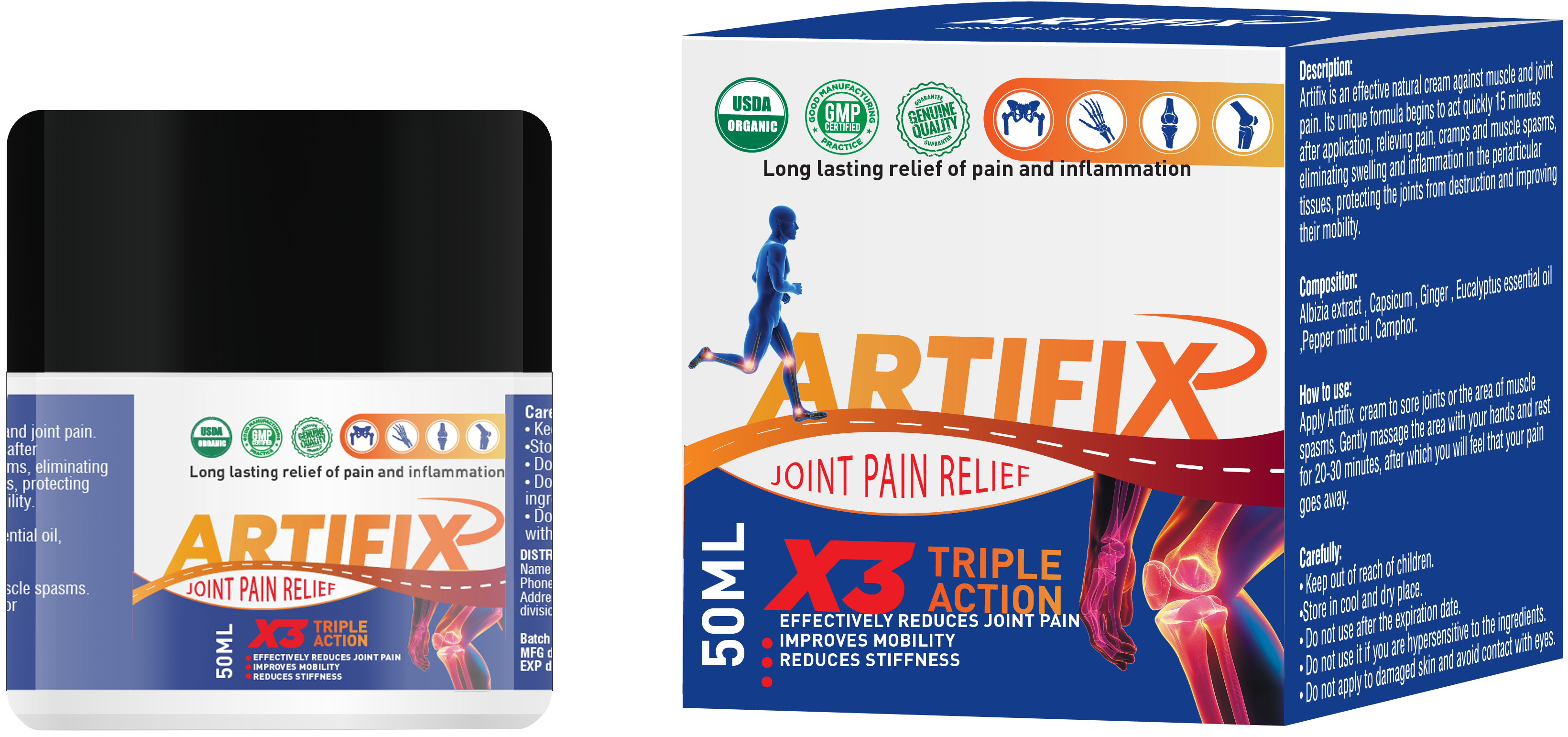
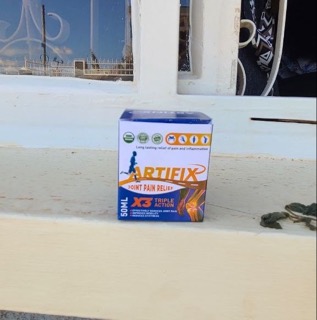
Alagestic, Cartilix, Fixis, Artifix or analogues are fast-absorbing gels that can be applied directly to sick joints and muscles. The formulation comprises a carefully selected combination of bioactive phytochemicals — including Gaultheria Oil, Chamomile Extract, Rosemary Extract, etc., to exhibit synergistic analgesic, anti-inflammatory, and vasomodulatory properties. Preclinical studies indicate that these compounds enhance local microcirculation, modulate pro-inflammatory mediators, and promote cellular repair and tissue regeneration, thereby supporting the restoration of musculoskeletal function.
These gels act in 3 stages: They first penetrate the joint to relieve pain and swelling, then restore ligament elasticity and stimulate synovial fluid production, and finally promote tissue repair and mobility restoration. This complex approach allows patients to regain freedom of movement while supporting long-term joint health.
And these aren’t just my words. Over the past six months, Artifix has been tested among over 3,000 Ugandans suffering from various joint diseases:
● 92% reported significant pain reduction and improved mobility
● 95% experienced less morning stiffness and inflammation
● 94% noticed relief during movement
● 74% saw reduced joint swelling
● 94% reported overall improved well-being
These results show that Artifix is not merely a temporary fix — it is a true solution that helps people restore their activity and quality of life. In Israel, I most often recommend this gel to patients with neck, back, elbows, knee, and shoulder pain, as well as for joint conditions affecting daily function, because it provides fast, reliable, and convenient treatment.
— Why aren’t there effective joint pain treatments in Ugandan pharmacies?

It’s very simple. People’s health is the most profitable business. And I say this as a doctor with extensive experience. Here in Uganda, major pharmacy chains and pharmaceutical corporations have grown accustomed to making billions from people’s suffering. It is simply not in their interest for patients to actually recover.
For example, the manufacturers of Alagestic and Artifix have tried repeatedly to enter the Ugandan pharmaceutical market, but every single time, they encountered artificial obstacles. Ugandan bureaucracy has created endless barriers and restrictions, turning every new attempt into a failure.
Suppliers, the so-called 'pharmacy mafia', pharmacy chains and pharmaceutical corporations are all working together to prevent truly effective treatments from reaching the Ugandan market. They deliberately suppress information about new medical advancements because, if products like Cartilix, Alagestic, Artifix, Fixis, or any equivalent were to reach Ugandan pharmacies, the entire painkiller industry would collapse overnight.
— What recommendations would you give to Ugandans suffering from joint pain?

If you are suffering from any joint pain, my top recommendation is to stop relying on outdated methods. We live in the 21st century, and there are now modern solutions that target the root cause of your pain, not just the symptoms. Why should you continue to suffer? Modern Israeli gels are natural, affordable, fast-acting, safe, and incredibly easy to use.
Thanks to collaboration with the manufacturer, we have now created a legal and reliable way for all Ugandans to order Artifix online. But keep in mind that there are very few units of Artifix left. Recently, demand has been rising sharply, likely because more and more people in Uganda are learning about its high effectiveness compared to the methods currently used in your country.
To order it at a discounted price, simply complete the official manufacturer’s form below. A medical consultant will contact you to answer any of your questions and confirm your delivery address.
 Grace Namutebi
if you're unsure leave a request. very nice girl advised me, explained everything adn gave me all the details. I'm expecting my artifix in 2/3 days
 Daniel Kato
I've been using cartilix an expensive alternative to artifix I was paying 490000 ugx per jar. It worked, yes, but the price was outrageous. the pain in my back disappeared andd for the first time in months, I could work again without suffering. For my wife i decided to order artifix — she had been struggling with constant neck pain. just a few weeks after she started using it her complaints stopped. She told me it felt like the pain had simply vanished. Honestly, I see no reason to keep overpaying for сartilix
 Samuel Bwambale
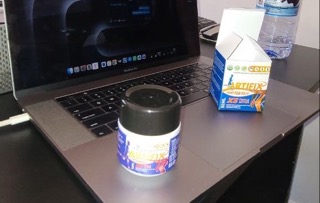
i used the artifix for a couple of days and while the pain has decreased a bit i expected more, Maybe i need more time to see better results
 Esther Nakato
I used to dance but I had to stop becaause of joint problems. i decided to try a course of treatment and now I feel a lot better. my joints are more flexeible and I’m back to doing what I love!
 Sarah Nabwire
I’ve had knee pain for most of my life but now I hardly feel it anymore. I can go on road trips with my family wwithout worrrying about the pain. it really helped me
 Joseph Lwanga
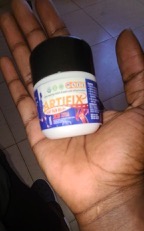
My wife suffered greatly from joint pain she received injections and took pills but nothing helped it would only help for a short while just a few months and then the pain would return it was truly horrible, yhen she tried the artifix course and for 6 month she felt no discomfort
 Michael Okello
I work as a taxi driver, spending almost all day sitting and doing very little physical activity. I started to notice that my knees were cracking and aching in the evenings. My wife who is a doctor says it's due to poor blood circulation which iis very bad for the joints. She brough me her artifix and said I should take a course of treatment. What can I say? It really works nothing crackles or hurts anymore. You doctors know the improvements that are happening but whats most important for me is that I feel good. Ttat's why I recommend it
 Mary Nakitende
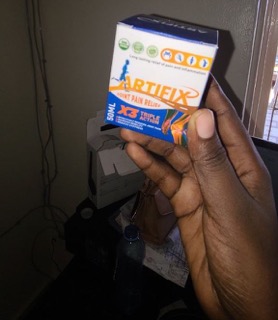
my joints had been hurting for a long time. I learned about Artifix from my therapist. he says it's the best product, and if you find it, you'll definitely save your joiints. I didn’t expect any special results, but a week after I started using it, I felt noticeably lighter! I became much more active,. So the doctor was right. Now, I recommend this product to everyone who has similar issue!s!
 Rebecca Kyomuhangi
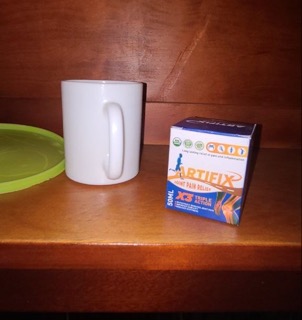
it's really an amazing product and I recommend it to everyone! i had a lot of pain in my thumb area, a nd I suspected it was gout. However, after using Artifix for 10 days, I felt much better, and the pain completely disappeared . I got it on sale when their promotion had just started. Now, I ordered it again for my friend's birthday aas the promotion will end soon. i'm glad I made it in time! She was so happy with this gift!
 Paul Tumusiime
it helped me thank you
 Jane Nambasa
i recommend this gel as it has helped reduce the pain in my kneees significantly
 David Ssemanda
I read the article and immediately decided to give it a tryy. The fact is that I’ve had osteochondrosis since I was 40,, years old. The pain is terrible. I have to change painkillers every six months because I get used to the old ones. Now, I’m sharing my resrults. Artifix arrived very quickly. aftaer the first course, the pain disappeared. I’m now taking the second course as instructed. thank you very much!
 Lydia Mukasa
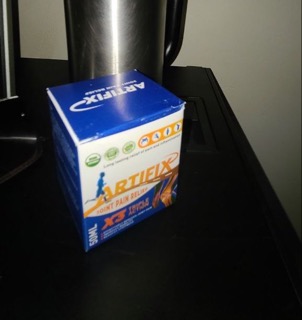
my son ordered this geel for me. I never believed in these kinds of products, but now I can honestly say the pain has eased. i feel much more active now and im really happy with the results
 Alice Nakiyingi
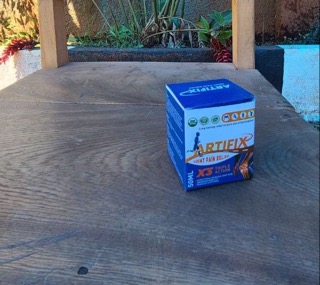
i kkknow this gel, and although it no longer bothers me after completing the course, i keep it in the medicine cabinet just in case. The product is very powerful and effective. you won't find anything like it in pharmacies
 Margaret Kaggwa
I don’t like going to hospitals butafter using this treatment, I haven’t had any joint issues. It was a pleasant surprise, and I’m happy I gave it a try
Comments: